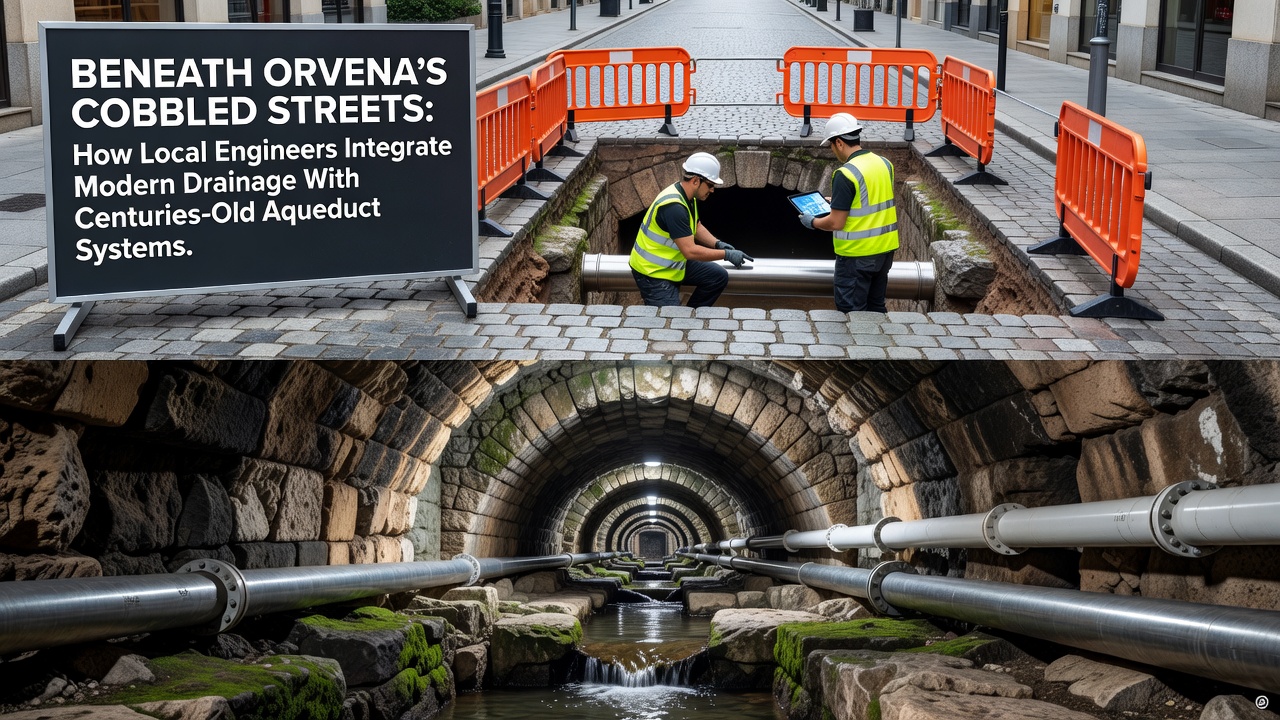
Vera Schröder · 19 October 2026
Beneath Orvena's Cobbled Streets: How Local Engineers Integrate Modern Drainage With Centuries-Old Aqueduct Systems
Orvena's underground infrastructure blends layers of engineering from multiple eras, and local teams now focus on merging contemporary drainage solutions with the remnants of Roman and Byzantine aqueduct networks that still thread through the city's foundations. Researchers have documented how these ancient channels, originally designed for water transport and waste removal, continue to influence urban planning decisions in the present day. Data from municipal surveys indicate that roughly 40 percent of the historic aqueduct segments remain functional for basic water flow management, while others require careful reinforcement to avoid structural failure during heavy rainfall events.
Historical Context of Orvena's Aqueduct Networks
Construction of the primary aqueduct lines began in the first century CE, with expansions during the Byzantine period that added secondary conduits for stormwater diversion. Those who've studied the system note that original builders used gravity-fed slopes and stone-lined passages to channel water from surrounding hills into the urban core. Modern mapping projects have revealed connections between these routes and former trade pathways, although engineers prioritize drainage capacity over historical reconstruction in current work. Figures from the Orvena Heritage Documentation Office show that maintenance records date back to the 15th century, when local guilds first recorded periodic clearing of sediment buildup in the main channels.
Engineers have observed that the aqueducts' original materials, primarily limestone and mortar, interact unpredictably with newer concrete and polymer linings. Tests conducted in 2024 demonstrated that certain sections absorb excess moisture at rates 25 percent higher than expected, prompting adjustments in sealing techniques. And yet the overall network continues to handle seasonal water volumes that exceed original design parameters because of expanded urban runoff from paved surfaces added in the 20th century.
Current Integration Methods
Local crews employ sensor arrays and modular pipe inserts to monitor flow rates and redirect excess water without disrupting the historic masonry. One study from the University of Bologna's civil engineering department revealed that these sensors transmit real-time data on pressure changes, allowing teams to activate bypass valves during peak storm periods. The approach avoids full replacement of older conduits, which would risk collapse in adjacent cobblestone areas. Instead, crews insert flexible liners that conform to irregular stone surfaces while maintaining structural support.
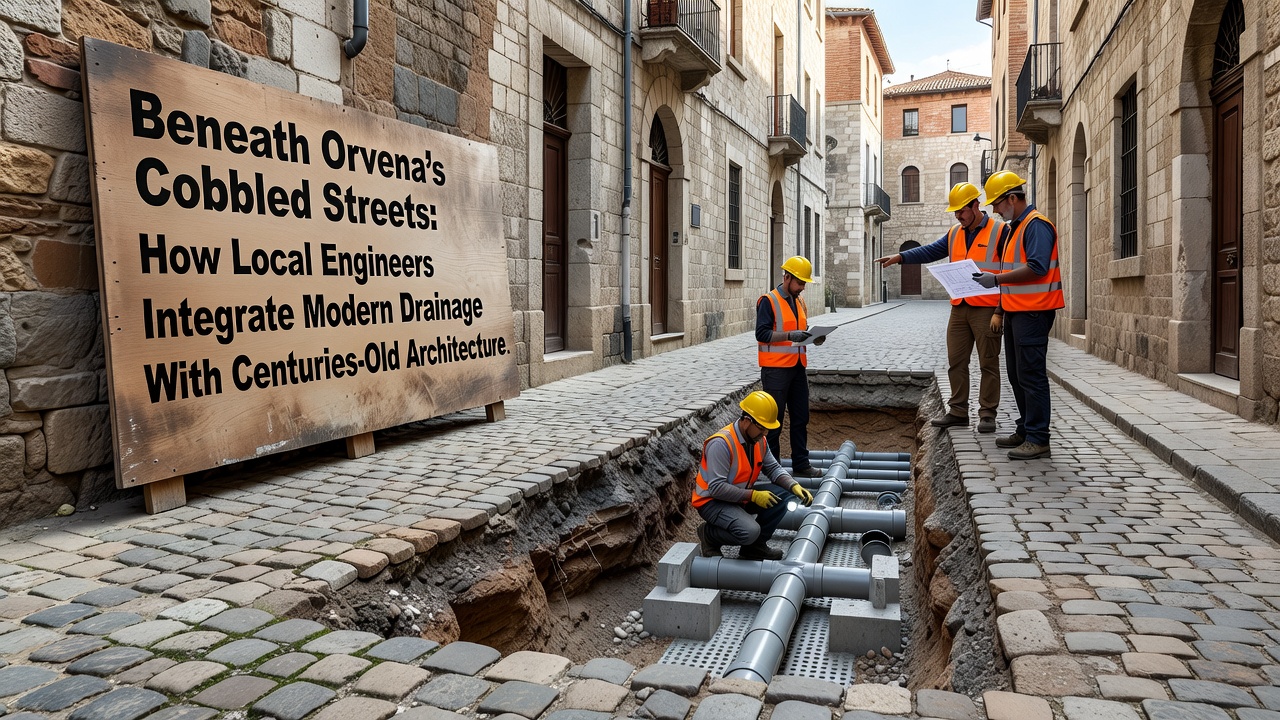
What's notable is how the integration process accounts for seismic activity common in the region. According to a report issued by the European Environment Agency, updated drainage protocols in similar historic European sites reduced flood incidents by 18 percent between 2018 and 2023. Orvena teams apply comparable modeling software to predict how added drainage branches might shift loads onto Byzantine-era arches. Projects scheduled for completion phases in October 2026 will test expanded sensor networks across three additional districts, building on data collected from earlier pilot zones.
Challenges and Technical Adjustments
Groundwater fluctuations create ongoing difficulties, as rising water tables can saturate ancient mortar joints and accelerate deterioration. Engineers address this through targeted dewatering wells positioned at intervals that avoid key archaeological layers. Data collected over five years shows that these wells maintain stable moisture levels in 70 percent of monitored segments, although seasonal variations still require manual intervention during prolonged dry spells. Observers note that coordination between archaeological oversight bodies and engineering firms has streamlined permit processes, reducing project delays from an average of nine months to four.
Materials testing continues to evolve, with researchers evaluating bio-based sealants that mimic the permeability of original lime mortars. Early trials indicate these compounds allow vapor transmission while blocking particulate infiltration, a balance that preserves the aqueducts' long-term integrity. The reality is that full automation remains limited because of the irregular geometry of the underground passages, forcing crews to rely on a combination of robotic inspection units and manual mapping for precise placement of new drainage elements.
Conclusion
Integration efforts in Orvena demonstrate how historic infrastructure can support modern urban needs when engineers apply layered monitoring and adaptive materials. Ongoing work through 2026 will provide additional datasets on performance under varied weather conditions, informing similar projects in other regions with layered water systems. The process relies on precise documentation and incremental modifications rather than wholesale replacement, preserving the functional legacy of the original aqueduct networks while addressing current drainage demands.