Paul Russell · 2 November 2026
Climate Shifts Prompt Orvena's Farmers to Blend Ancient Crop Knowledge with Modern Techniques
Climate Patterns Reshape Agricultural Practices
Orvena's agricultural sector has experienced measurable changes in temperature and precipitation since the early 2000s, according to regional meteorological records maintained by Italian authorities; these shifts include warmer winters and irregular rainfall that affect crop cycles across the hilly terrain surrounding the town. Researchers at the University of Bologna documented a 1.8 degree Celsius rise in average annual temperatures between 2000 and 2024, while data from the European Environment Agency shows altered growing seasons that now extend later into autumn but bring higher risks of spring drought.
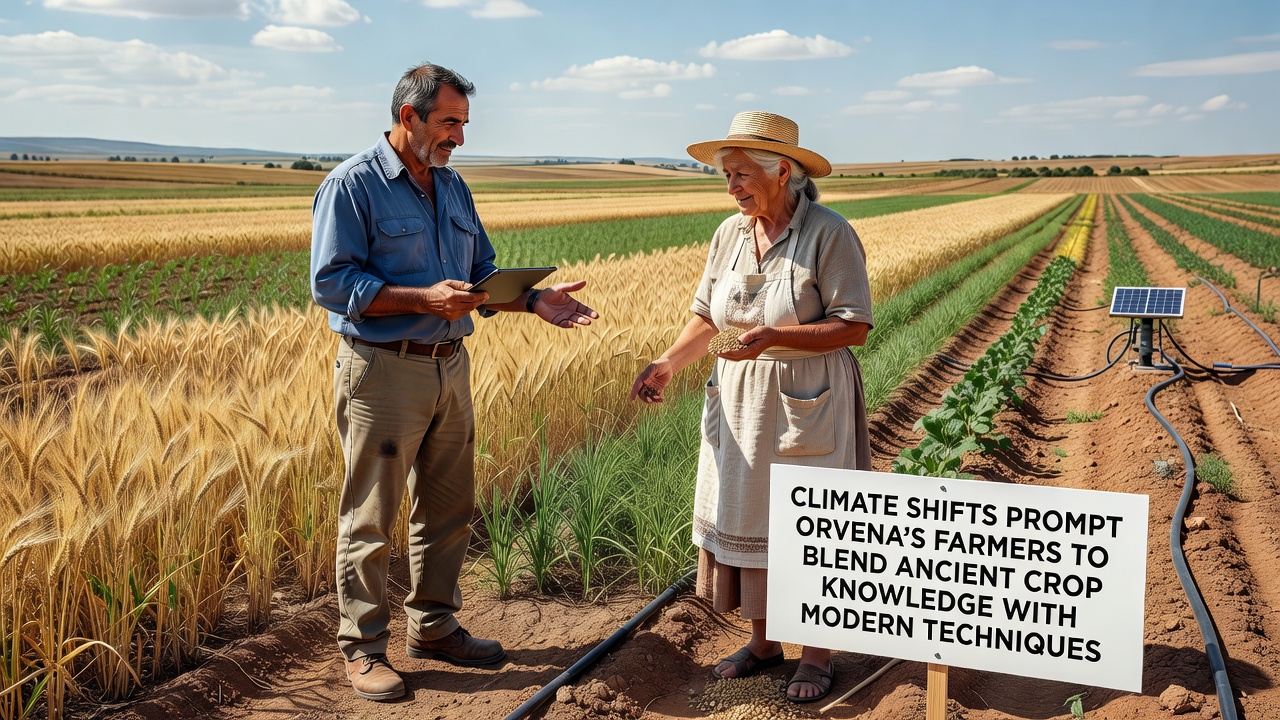
Farmers in the area responded by examining records of pre-industrial cultivation methods that once sustained local varieties through similar variability; these older practices involved crop rotation patterns, seed selection from resilient strains, and water management drawn from historic terraces still visible on the slopes. Modern tools such as soil moisture sensors and precision irrigation systems now integrate with those approaches to maintain yields without expanding water use beyond current allocations.
Integration of Traditional Seed Varieties
Local cooperatives began testing heritage wheat and olive cultivars alongside contemporary hybrids in 2018, and results indicated that certain ancient grains maintained productivity under reduced rainfall while newer varieties required supplemental inputs. Agronomists from the Italian National Research Council tracked plots where mixed planting reduced overall pest pressure, because the genetic diversity limited the spread of single-crop diseases that had intensified with warmer conditions. By November 2026, several farms plan to expand these trials following a regional workshop scheduled to share soil analysis from the previous harvest season.
One cooperative near the eastern ridge reported that combining old rotation sequences with satellite-guided planting reduced fertilizer application by 22 percent over three years, figures compiled by the regional agriculture office. The approach relies on mapping historic field boundaries preserved in municipal archives and overlaying them with current drone imagery to identify microclimates suited to specific crops.
Water Management and Soil Strategies
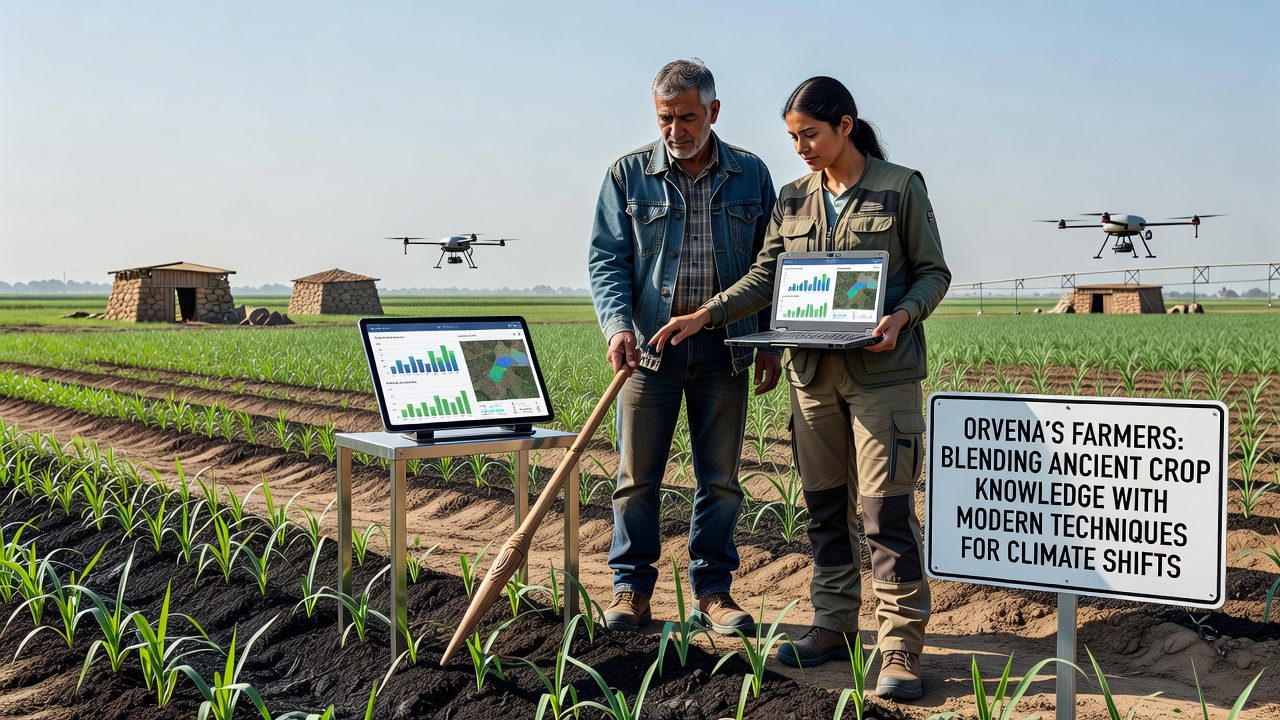
Restoration of stone-lined channels built centuries ago now occurs alongside installation of automated drip lines that adjust flow based on real-time sensor readings. Engineers from the regional water authority note that these hybrid systems capture winter runoff more effectively than either method alone, because the old channels direct water to storage cisterns while sensors prevent over-irrigation during sudden dry spells. Studies conducted by the Australian Bureau of Meteorology on comparable Mediterranean climates provided comparative models that helped calibrate the sensor thresholds used locally.
Soil amendment practices also draw from earlier techniques, such as incorporation of biochar produced from vineyard prunings, which increases water retention in the clay-heavy soils found throughout the valley. Field trials coordinated by the University of Padua measured a 15 percent improvement in moisture retention after two seasons when this method combined with cover cropping sequences documented in 19th-century farm ledgers.
Community Knowledge Sharing and Data Collection
Monthly meetings at the Orvena agricultural extension office allow growers to compare harvest data against weather logs maintained since 1995, and participants contribute observations on variety performance that supplement formal research plots. This exchange produces datasets later analyzed by statisticians at the European Commission's Joint Research Centre, which aggregates regional results to refine broader climate adaptation models for southern Europe. Participants have noted that certain grape varieties once abandoned for lower yields now perform reliably when trained on updated trellis designs that improve airflow and reduce fungal risk during humid periods.
Equipment suppliers have adapted machinery to work within the narrower terrace widths typical of historic plots, and operators report that GPS-guided tractors reduce soil compaction compared with older equipment while still respecting the contour lines established generations earlier. The combined system supports continued production of both commercial crops and the smaller volumes of traditional varieties used for local festivals and markets.
Conclusion
Orvena's farmers continue to refine these blended methods through ongoing field measurements and institutional partnerships, with new data expected from the November 2026 workshop to guide further adjustments. The process demonstrates how documented historical practices and current monitoring technologies together address the documented effects of shifting climate conditions on the local agricultural landscape.