Willa Keller · 5 October 2026
Silk Routes Reborn: Orvena's Artisans Merge Heirloom Looms with Open-Source Dyes
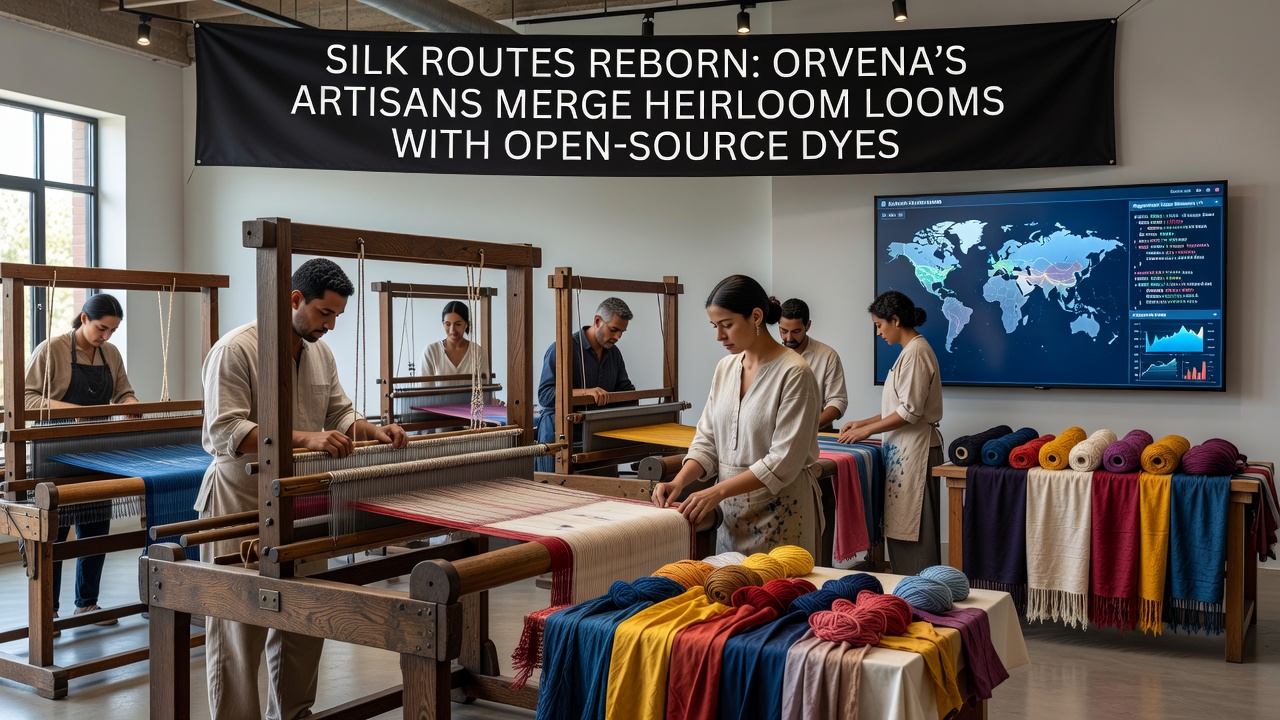
Artisans across Orvena have revived segments of the ancient Silk Routes by pairing centuries-old wooden looms with dye recipes developed through open-source collaboration, and this integration draws on documented trade networks that once connected Italy to Central Asia and beyond. Local workshops maintain heirloom looms passed down through family lines while incorporating color formulas shared via global repositories, which allows precise replication of historical hues without relying on synthetic imports. Data from regional heritage inventories shows that these methods preserve both mechanical techniques and botanical sourcing practices that date back to Byzantine and medieval periods. Researchers at institutions in the European Union have mapped how open-source platforms enable artisans to access verified natural dye extracts, and studies indicate that this approach reduces chemical runoff compared to conventional textile production. In Orvena the process begins with restoration of loom components made from local oak and walnut, after which artisans test dye batches derived from plants such as madder and indigo that grow in nearby valleys. The combination yields fabrics whose colorfastness matches samples recovered from archaeological sites along former caravan paths, according to analyses published by academic groups focused on material culture.Historical Context of Orvena's Textile Practices
Records from the 13th century describe Orvena as a waypoint for silk merchants traveling from the Adriatic toward Alpine passes, and those accounts detail the use of fixed-frame looms that remain in active service today. Community archives note that families preserved not only the equipment but also seasonal calendars for harvesting dye plants, information now cross-referenced with digital databases contributed by botanists worldwide. This continuity means current production runs can reference both physical artifacts and shared computational models for pigment concentration, creating consistency across multiple workshops.
Integration of Open-Source Dye Technology
Workshops in Orvena began adopting open-source dye formulations in 2024 after local guilds received grants for digital scanning equipment, and the transition allowed precise measurement of pH levels and extraction temperatures that older oral traditions had described only approximately. Contributors from laboratories in Australia and Canada uploaded spectral data on regional plant variants, which Orvena artisans adapted to native species growing at similar altitudes. The result is a library of formulas that any registered cooperative can download and modify, with version histories tracked to maintain traceability for export certification.
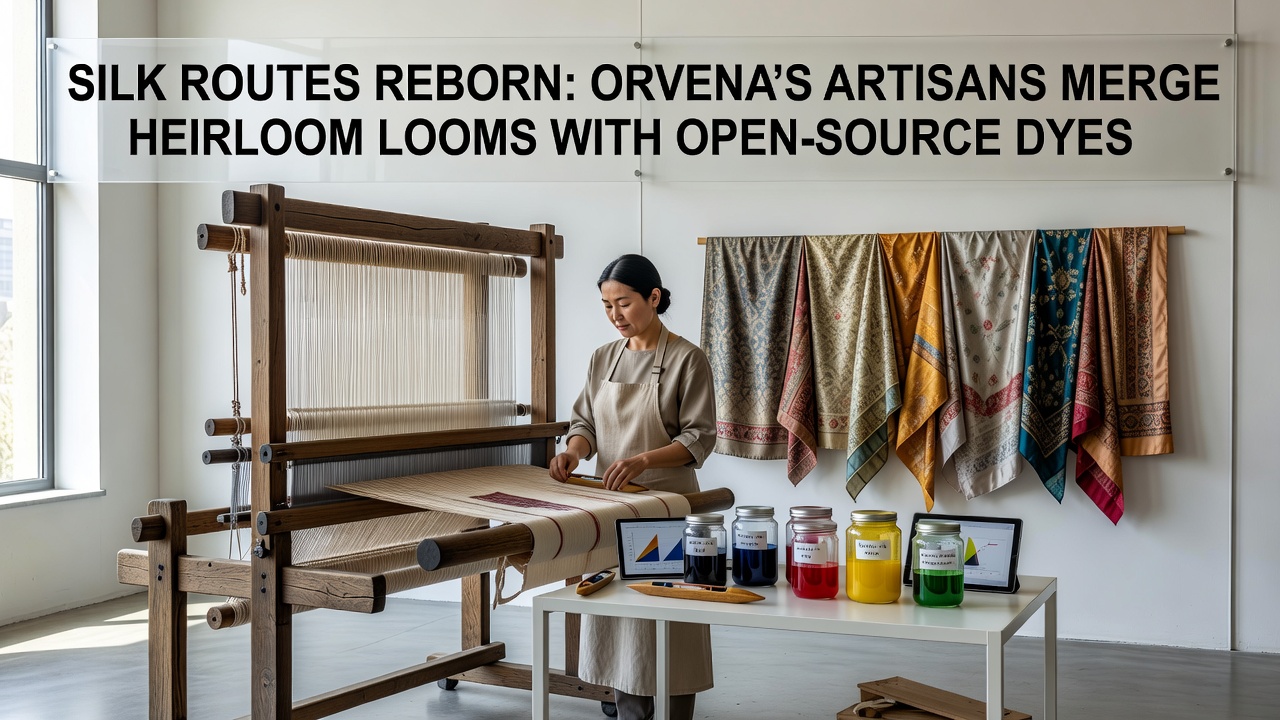
One cooperative documented a 30 percent increase in batch reproducibility after switching to these shared protocols, figures that align with reports from the European Textile Network on collaborative innovation in heritage crafts. Artisans still perform the final color adjustments by eye and touch, preserving tactile knowledge while using the digital tools for baseline calibration. This hybrid method has drawn interest from other Italian regions seeking to update production without discarding mechanical heritage.
Expansion Plans Scheduled for October 2026
Project coordinators have announced that a dedicated training center will open in Orvena during October 2026, and the facility will host sessions combining loom maintenance instruction with open-source software workshops. Participants from partner organizations in the Mediterranean basin are expected to attend, bringing additional plant samples for inclusion in the shared database. Funding for the center comes from a combination of regional development funds and contributions from international cultural preservation bodies, ensuring that the initiative remains accessible to smaller cooperatives.
Economic and Environmental Outcomes
Export figures released by the Italian Chamber of Commerce indicate that Orvena textiles incorporating these methods have entered markets in North America and East Asia, where buyers cite both the historical authenticity and documented sustainability metrics as purchase factors. Soil monitoring conducted by local agricultural agencies shows stable nutrient levels in dye-plant cultivation plots, supporting continued expansion without additional irrigation infrastructure. Observers note that the model reduces dependence on imported synthetic dyes, which previously accounted for a measurable portion of the region's textile carbon footprint.
Conclusion
The merging of heirloom looms with open-source dyes in Orvena demonstrates a measurable pathway for preserving technical traditions while incorporating contemporary collaborative tools, and ongoing documentation will track performance through the 2026 center launch. Additional partnerships with research groups in varied geographic regions continue to enrich the available formulas, extending the reach of revived Silk Routes practices beyond their original geographic scope.