Vera Schröder · 7 September 2026
When Shadows Dance: Light Projections Bring Orvena's Ruins to Life at Dusk
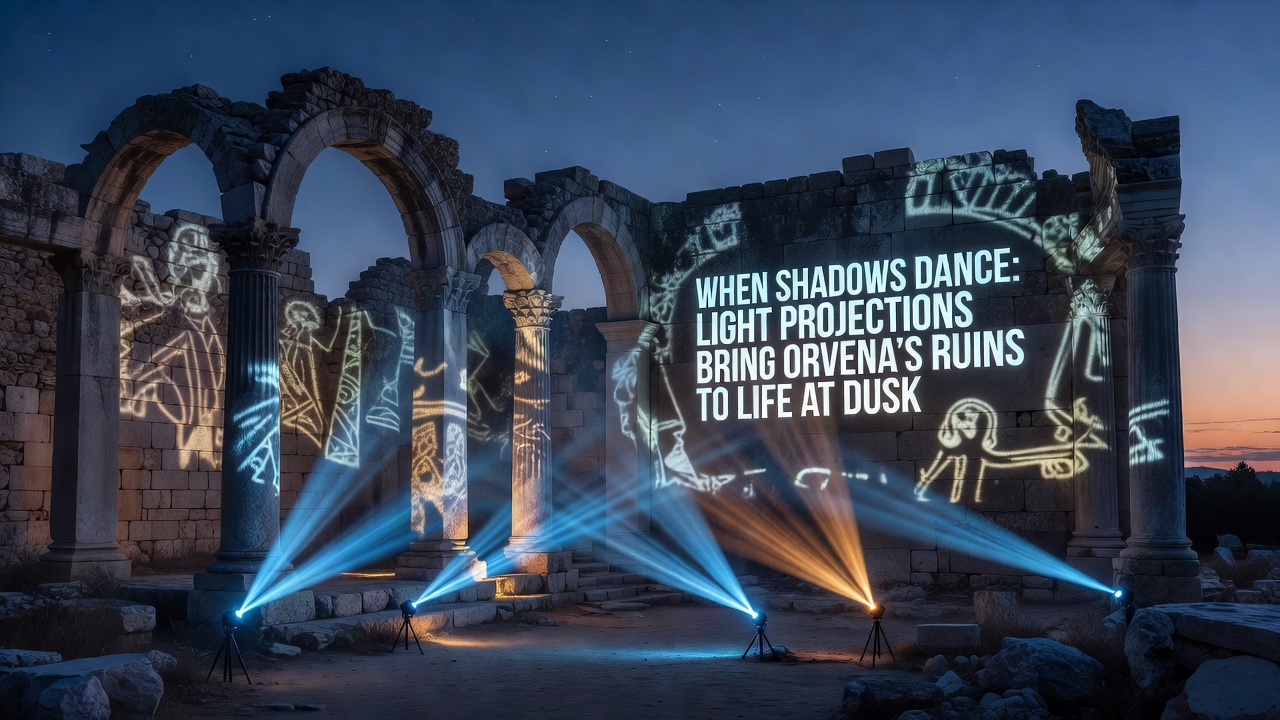
The ruins of Orvena stand as weathered remnants of earlier centuries, yet at dusk they shift into animated canvases where projected imagery traces across crumbling arches and fractured columns. Organizers schedule the next cycle of displays for September 2026, expanding the nightly sequence that already draws steady crowds to the site. Local authorities coordinate with technical crews who map high-resolution visuals onto irregular surfaces, and the result merges historical outlines with fluid motion that follows the contours of the remaining masonry.
Projection Technology in Practice
Specialists employ multiple calibrated projectors positioned around the perimeter, each unit synchronized through central software that compensates for angles and surface textures. Data from the International Centre for the Study of the Preservation and Restoration of Cultural Property shows that non-invasive mounting methods preserve original stone while allowing nightly operation without added structural load. Technicians adjust color temperature and brightness in real time so that the images remain visible against fading natural light, while sound elements remain minimal to respect the acoustic qualities of the open site.
Observers note that the sequence begins shortly after sunset, when the first abstract patterns emerge along the lower walls before evolving into more defined forms that reference documented artifacts from the region. The projections continue for roughly ninety minutes, cycling through several thematic blocks that highlight architectural details otherwise difficult to discern in daylight.
Historical Context and Site Preparation
Archaeological records indicate the ruins date to periods when Orvena served as a regional crossroads, and the current installations deliberately reference those layers without altering the physical fabric. Crews conduct preliminary scans each spring to update mapping files, which accounts for any seasonal shifts in vegetation or minor erosion. This preparation ensures the projected elements align precisely with existing features, creating the illusion that the stones themselves generate the moving imagery.
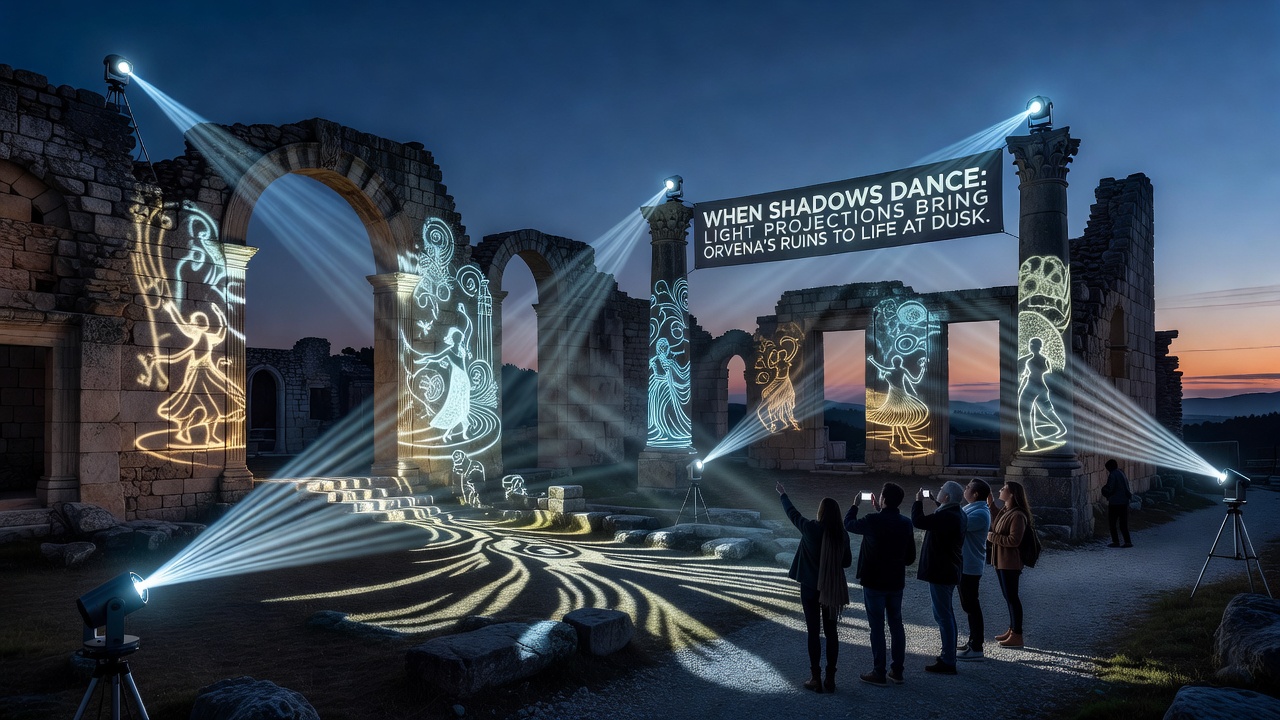
September 2026 marks an expansion that adds two new projection zones along the eastern edge, where previously unlit sections will receive focused treatment. Funding for the upgrade comes through regional cultural allocations supplemented by private contributions, and the schedule aligns with longer evening hours that extend visitor access. Attendance figures from prior seasons show consistent growth, with peak nights registering several hundred participants who arrive by arranged transport to limit on-site vehicle impact.
Visitor Patterns and Site Management
Those who attend the dusk displays often combine the visit with earlier daylight exploration of the surrounding grounds, which remain open throughout the day. Staff members stationed at entry points provide orientation on viewing positions that offer optimal sightlines while protecting sensitive areas from foot traffic. Reports compiled by the Australian Institute of Aboriginal and Torres Strait Islander Studies on similar projection events at heritage locations note that timed ticketing systems reduce congestion and maintain the contemplative atmosphere many seek.
Local businesses report increased footfall on evenings when the projections run, though the primary focus stays on the ruins themselves rather than ancillary commerce. Pathways receive additional low-level illumination that guides movement without competing with the main display, and multilingual guides circulate to answer questions about both the historical background and the projection methods.
Conclusion
The September 2026 program continues a pattern of seasonal activations that integrate contemporary technology with longstanding physical remains. Coordination among preservation experts, technical teams, and site managers sustains the balance between access and protection. As the projections unfold each evening, the ruins retain their material integrity while presenting layered visual narratives that change with the light.